One call, one description
Explain the leak, the roof type if you know it, and the building use once. We connect you with a local contractor who handles commercial roofing work.
Serving Lawrenceville, Georgia & surrounding areas
Calls answered around the clock
Describe your flat-roof issue once and we'll connect you with a local commercial roofing contractor who can inspect, recommend options, and handle the work.
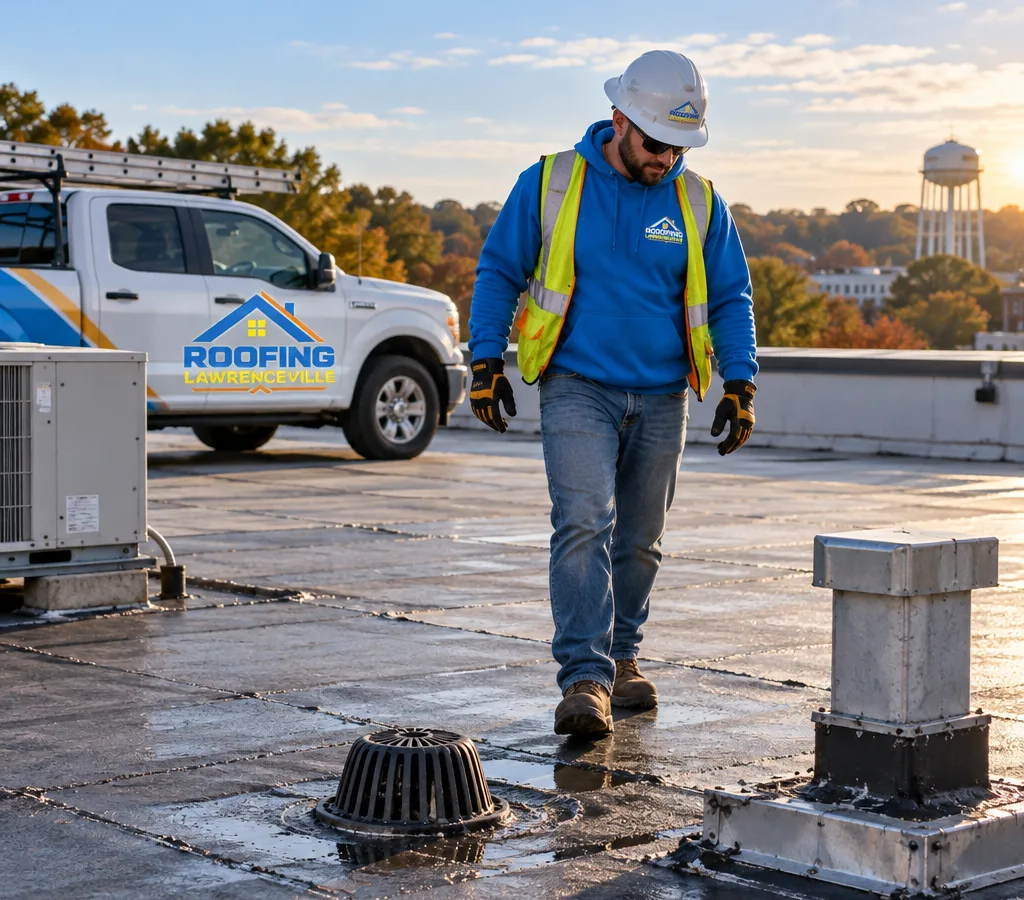
If you're searching for commercial roofing Lawrenceville GA, you're usually dealing with a flat or low-slope system on an office, retail building, warehouse, church, or multi-tenant property. Commercial roofs are built to handle long spans, rooftop equipment, and frequent penetrations, so diagnosing the real source of a leak or deterioration takes a different approach than a steep-slope home roof.
A commercial roofing contractor will usually start with an on-roof walk-through and then work backward from the symptoms. That means checking:
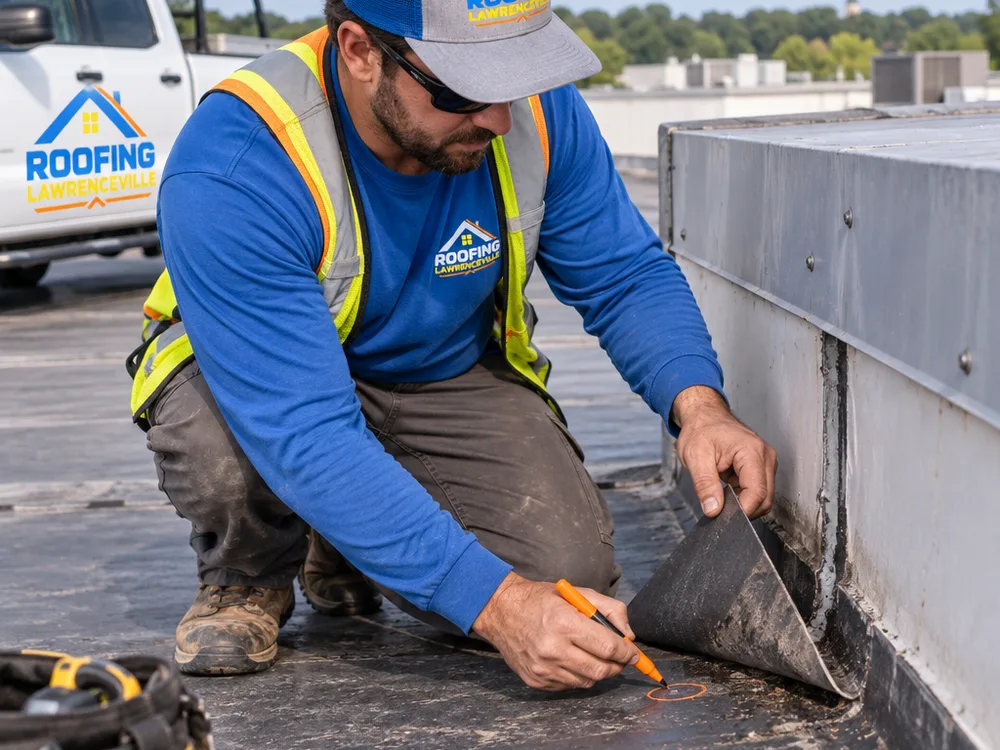
Commercial roofing in Lawrenceville often comes down to getting the details right. Many roof leaks don't originate directly above the stain. Water can travel along insulation, decking ribs, or around curbs before it shows up inside.
Common project types a contractor may handle:
When you call Roofing Lawrenceville, you describe the building type, roof access, and what you're seeing. We then connect you with an independent local contractor who works on commercial roofs and can take the next steps directly with you.
Explain the leak, the roof type if you know it, and the building use once. We connect you with a local contractor who handles commercial roofing work.
Commercial roofs can involve membranes, coatings, insulation, drains, and rooftop units. The contractor you speak with should be familiar with low-slope details.
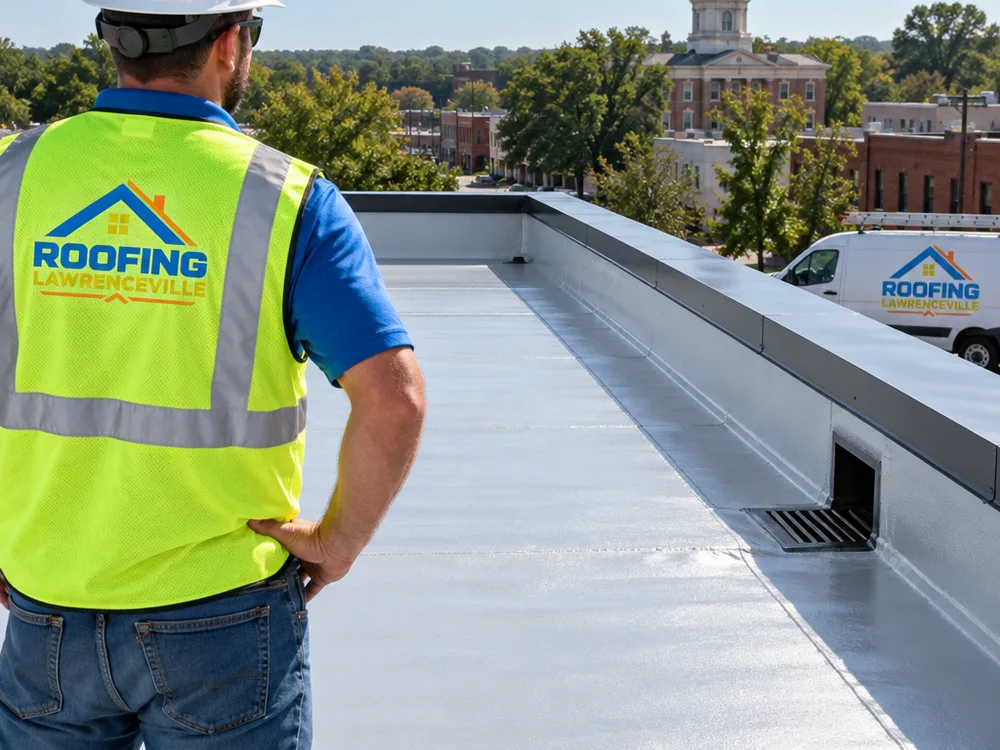
Lawrenceville buildings see hot summers and heavy rain events, so drainage, ponding areas, and edge details matter when planning repairs or replacement.
You speak directly with the contractor, review their findings, ask questions about options, and decide whether to move forward.
If you're building a maintenance plan, coordinating around tenants, or trying to reduce repeat leak calls, the right contractor can help prioritize details and timing.
Share the building type, how long the issue has been happening, where water shows up, and whether you have rooftop equipment or recent work history.
You're put in touch with an independent contractor who serves Lawrenceville and handles flat and low-slope roof systems.
The contractor inspects the roof, traces likely entry points, and explains repair, restoration, or replacement paths based on roof condition and risk.
If you want to move forward, scheduling, site rules, access, and project coordination happen directly between you and the contractor.
If you're tracking recurring leaks or planning a flat-roof project, a short phone call is the simplest way to get connected with a local commercial roofer who can evaluate the details and explain next steps.
The most helpful details are the building type, approximate roof size, roof access method, and what symptoms you're seeing inside. If you know the roof system—TPO, PVC, EPDM, modified bitumen, built-up roof, or metal—mention it, but it's fine if you don't. Also note where leaks show up, whether they correlate with heavy rain, and whether there is rooftop equipment near the problem area.
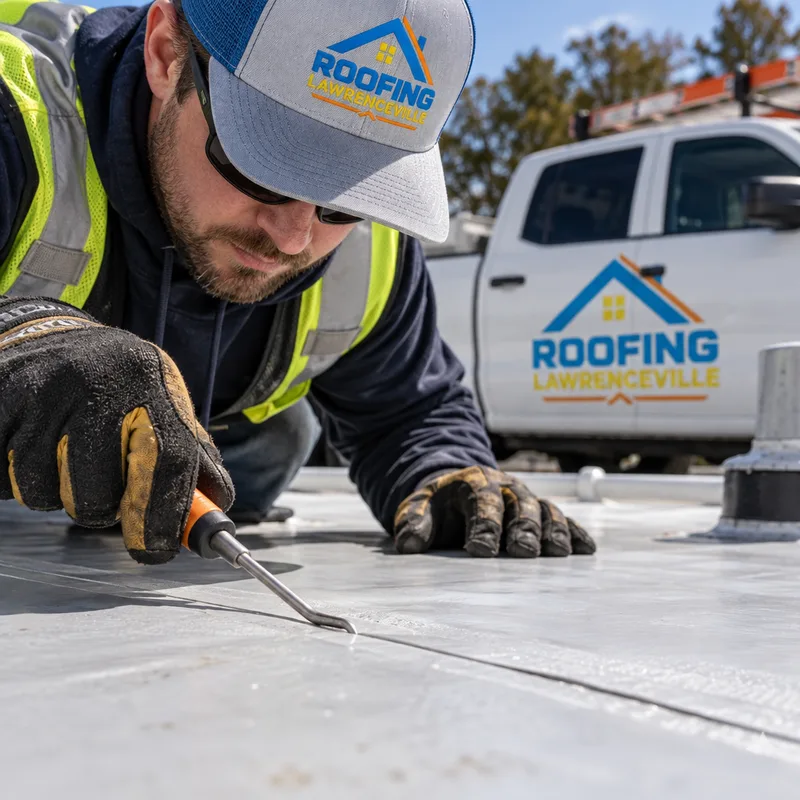
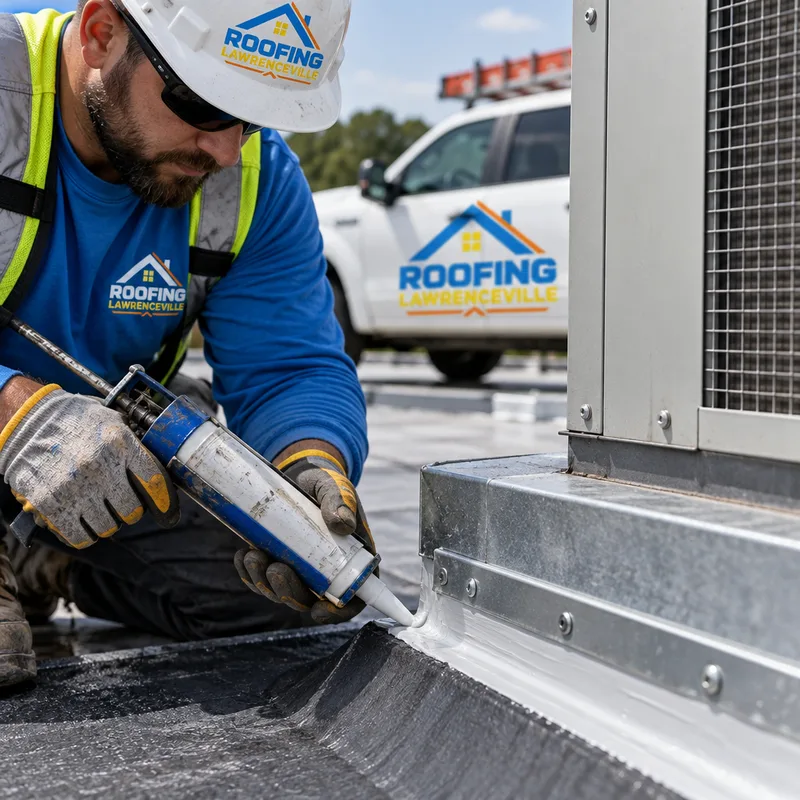
A contractor usually starts by inspecting penetrations, flashings, seams, transitions, and drainage points, then follows water paths based on slope and interior staining. On low-slope systems, water can travel before it appears inside, so the inspection often includes checking for wet insulation, failed terminations, and deteriorated sealant around curbs and edges.
Many commercial roofs use single-ply membranes such as TPO, PVC, and EPDM, along with modified bitumen, built-up roofing, coatings over eligible substrates, and metal roof systems on low-slope assemblies. The best repair approach depends on the existing system, how the details were originally installed, and whether moisture is trapped in the insulation.
Repair makes sense when problems are isolated to specific details like seams, penetrations, edge terminations, or small damaged areas. Replacement is more likely when leaks are widespread, the roof has repeated failures in multiple zones, or saturation and deterioration make spot repairs unreliable. The contractor you speak with can explain the risk tradeoffs after inspecting the roof.
The first step is confirming whether drains, scuppers, and downspouts are clear and correctly placed, because overflow and slow drainage often look like membrane failure. If the roof has low spots, options can include localized leveling approaches, improving drainage paths, and correcting details that allow water to sit at terminations. The right fix depends on the roof assembly and how water currently leaves the roof.
Yes. Curbs, lines, and equipment supports create transitions that need compatible flashing details, and they can also limit how restoration or replacement can be staged. A contractor may ask about service access, whether units can be temporarily lifted, and who coordinates mechanical work if curbs or platforms need changes.
Roofing Lawrenceville connects you with a local contractor, and that contractor will tell you how they prefer to coordinate access, safety rules, and any tenant considerations. If your building has sensitive operations, mention it on the call so you can be matched with someone who is comfortable working within those constraints.
Pick up the phone and describe what's happening on the flat roof. We'll connect you with a local commercial roofing contractor serving Lawrenceville who can inspect the system and walk you through the next steps.