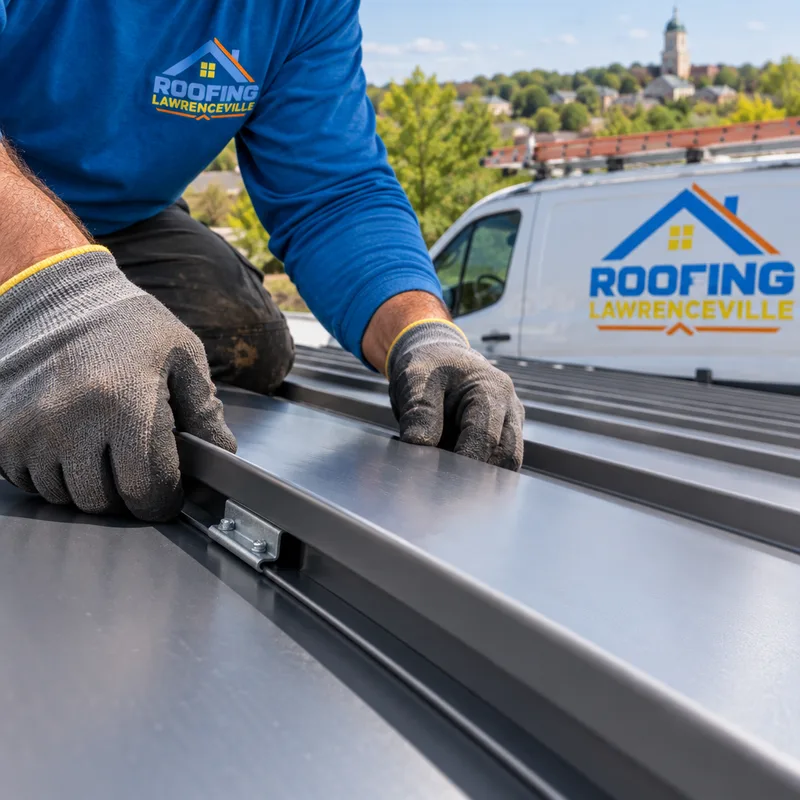
Standing seam panels
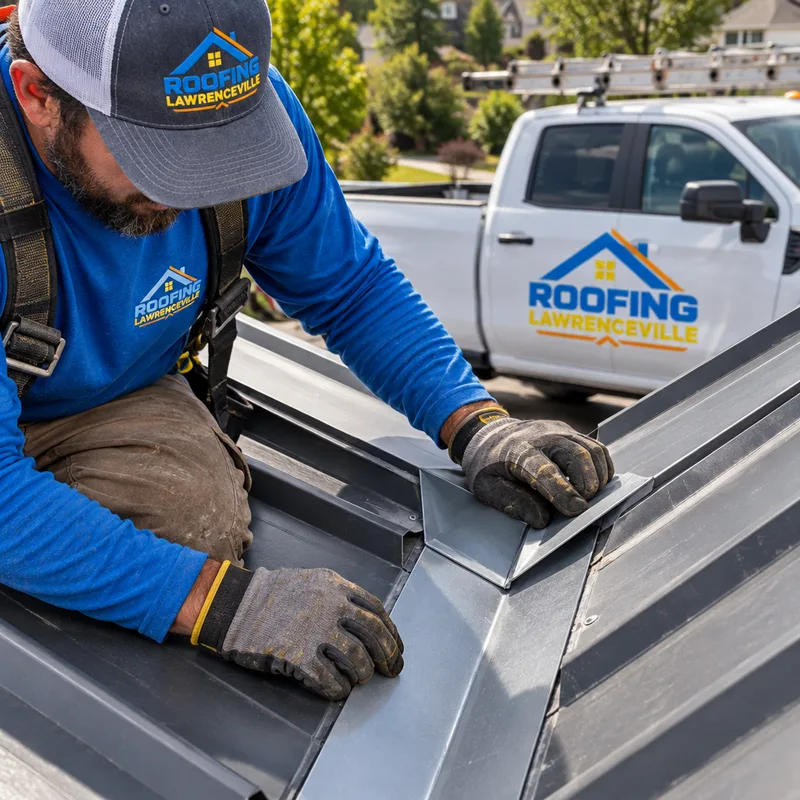
Clean, modern lines with raised seams. Contractors will talk through seam height, panel width, clip systems, and how hips and ridges are finished.
Serving Lawrenceville, Georgia & surrounding areas
Calls answered around the clock
Describe your roof, your goals, and your timeline once, and we'll connect you with a local contractor in Lawrenceville who works on metal roofing.
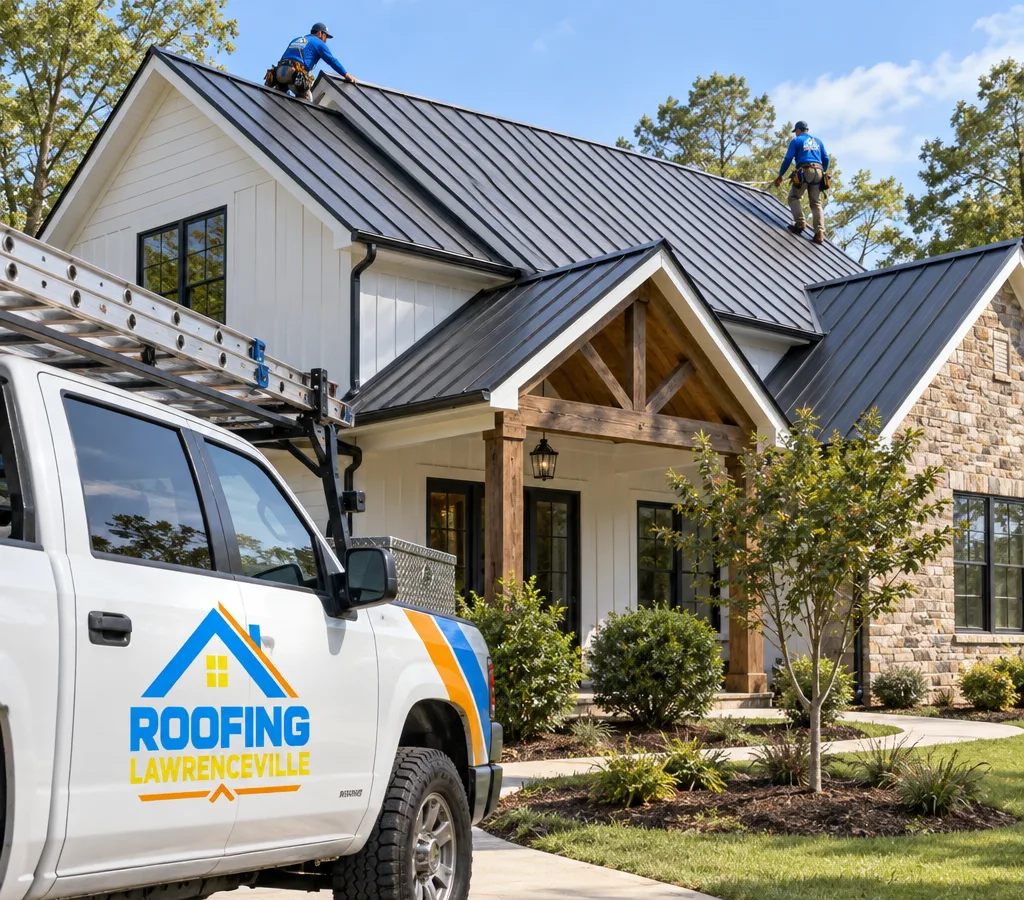
If you're searching for metal roofing Lawrenceville GA, you're usually deciding between replacing an older roof with metal, switching from shingles for a different look, or fixing chronic issues like repeated repairs, wind-lift, or troublesome valleys.
A metal roof is not one product. It's a system: the panels themselves, the underlayment, ventilation, flashings, pipe boots, valley metal, edge details, and the way the roof transitions around chimneys and walls. The right system depends on your roof shape and how water moves across it.
Before a contractor recommends a panel type or color, they typically start with a few fundamentals:
Roofing Lawrenceville is a referral service. When you call, you explain what you have now—shingles, old metal, flat sections, or a steep pitch—what you want to change, and any problem areas you've noticed. We then connect you with a local contractor who can take a closer look and walk you through the options.
Clean, modern lines with raised seams. Contractors will talk through seam height, panel width, clip systems, and how hips and ridges are finished.
A different look with visible screws and washers. A good proposal spells out fastener type, spacing, and how penetrations and edges are handled.
A profile that resembles traditional roofing shapes while still using metal. Contractors will evaluate roof geometry and detail complexity.
Many residential systems use factory-applied finishes. Ask what finish system is being offered and how it's expected to weather in Georgia sun and storms.
The layer under the metal is a major part of performance. Contractors may discuss peel-and-stick areas, synthetic underlayment, and how valleys and eaves are protected.
When you call, share the building type, roof height, current material, leak locations if any, and whether you're considering standing seam, exposed-fastener, or another profile.
We connect you with an independent contractor serving the Lawrenceville area who can evaluate your roof layout, details, and material fit.
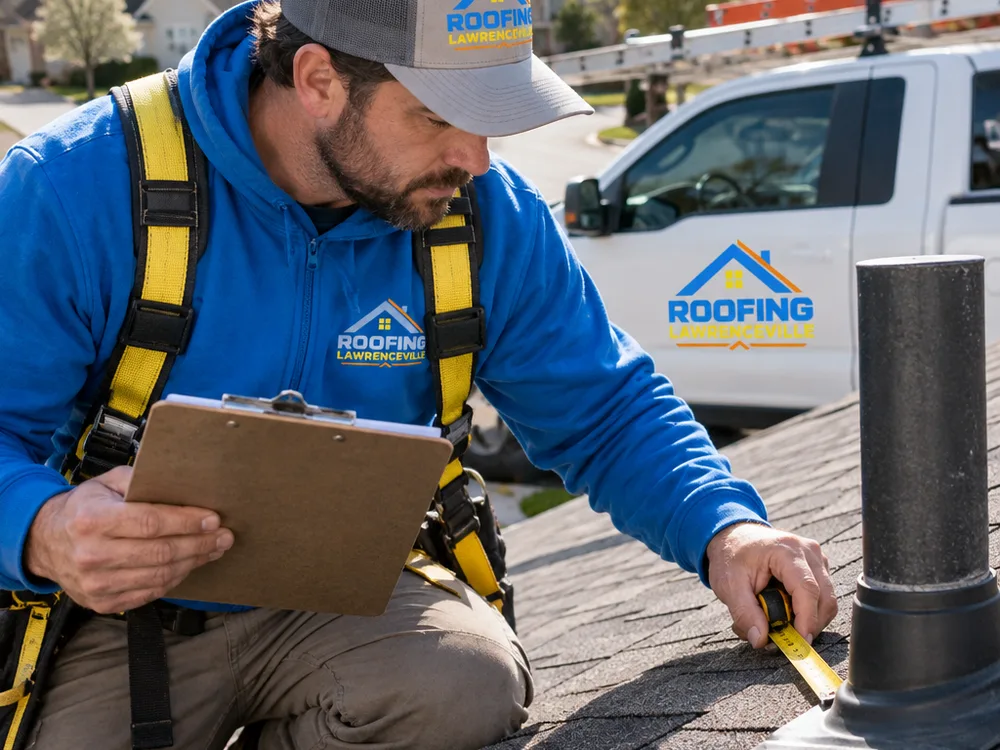
The contractor typically checks slope, deck condition, penetrations, valleys, attic ventilation, and flashing transitions, then proposes a system built for your roof geometry.
Expect clear conversation about tear-off versus overlay when appropriate, how drip edge and gutters tie in, chimney and wall flashings, and what gets replaced or reworked.
A full reroof is usually a multi-day job depending on roof size and complexity. The contractor should explain staging, debris handling, and what you'll review at completion.
If you're comparing panels, colors, and profiles, a short phone call can save hours of guessing. Describe the roof once and get connected with a local metal roofing contractor who can quote the system that fits your home.
The best choice depends on your roof slope, the look you want, and how many penetrations and transitions your roof has. Standing seam hides fasteners and uses clips and seams, while exposed-fastener systems rely on screws and washers; the contractor you're connected with can explain what fits your roof layout and how each system is detailed at edges, valleys, and penetrations.
Sometimes it can, but it depends on the condition of the shingles and deck, how many layers already exist, and whether edges and flashings can be rebuilt correctly. A contractor will typically look at roof lines, soft spots, and how water is managed at eaves and valleys before recommending overlay versus tear-off.
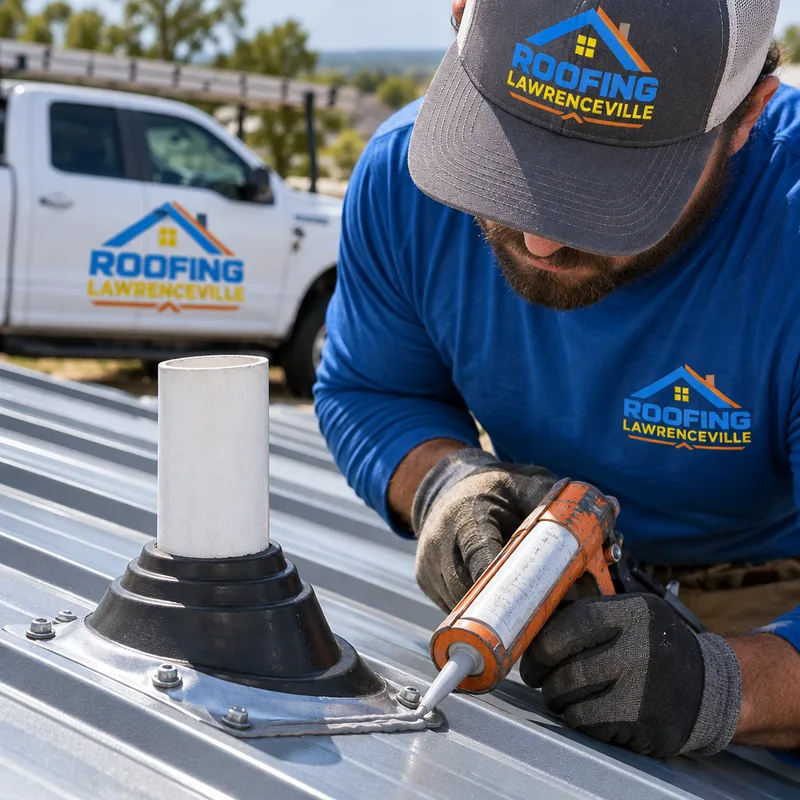
Most leak issues trace back to flashings, valleys, and penetrations rather than the field panels. Ask the contractor how chimney flashing is handled, what type of pipe boots are used, how valleys are formed and lapped, and how wall transitions are flashed where the roof meets siding or masonry.
A few specifics help the contractor give useful direction: approximate roof age, current material, how many stories, any known leak locations, and photos if you have them. It also helps to mention whether you're focused on a modern standing seam look, a traditional metal shingle profile, or a particular color family.
Ventilation still matters because it's tied to attic heat and moisture, not just the roof covering. The contractor may look at soffit intake, ridge exhaust, bathroom vent routing, and any signs of moisture in the attic, then recommend adjustments that make sense with the new roof system.
Roofing Lawrenceville connects callers to local contractors who do metal roofing work in the Lawrenceville area. You'll speak directly with the contractor about options and scope, and you decide whether to move forward after you've reviewed their recommendations.
Call and describe your roof once. We'll connect you with a local Lawrenceville contractor who handles metal roofing, so you can get clear guidance on panels, colors, details, and next steps.